
Give as a gift
COMIC RELIEF: Satire in mass culture and film in Afghanistan and its diasporas
Kitschy, low-budget B-films, TV shows; dubbed Turkish dramas and Hindi serials; late-night comedy talk shows and satire; Comedy is a wide-spread genre in Afghanistan and its diaspora. In our film programme COMIC RELIEF we look at the different genres of comedy and satire produced in Afghanistan.
The programme is anchored by The Prince of Nothingwood (2017) by Sonia Kronlund - a portrait of Salim Shaheen, Afghanistan’s most popular “youtube” filmmaker - labelled the Sultan of Cinema, Shaheen utters the phrase “Cinema or death” a declaration to his belief in filmmaking as survival. A former soldier, unwillingly drafted into war, Shaheen transforms his life experiences into films that speak directly to everyday audiences distributed amongst phones, to laptops, to tv screens. In this programme and accompanying talk, the curatorial collective AVAH spotlights how these often-dismissed forms become a window into an Afghanistan we don’t otherwise see.
In the programme we also see older comedies made by the Afghan film institute. Akhtar-e Masqara or Akhtar, the Joker (1981) by Latif Ahmadi contrasts the impoverished conditions in Kabul’s old city, home of the friendly and naïve Akhtar, with the fashionable bungalows and modern lifestyle of the affluent neighbourhood of Shar-e nau. What starts as a comedy gradually unfolds into a tragic critique, using humour to expose the class divisions of Afghan society. Talabgar or The Suitor (1980) by Khaleq Halil, is devised as a comedy, with an imposter trying to obtain upward mobility by marrying the emancipated Sima. His desire to marry “upwards” is driven by aspiration, exposing marriage as a transactional tool within a rigid class system.
Filmorgh or Elephantbird (2018) by Amir Masoud Soheili is about the last wish of an old Afghan man to give his "elephant-bird" (turkey) to his grandchild. Soheili captures the essence of travelers' conversations on Afghanistan’s dangerous roads; where a joke is slipped in between life-threatening moments and humour becomes a temporary release.
Our programme is contrasted and compared to Mercedes (1994) by Yousry Nasrallah. In this lively comedy Nasrallah satirizes Egyptian social and political tension through the character Noubi. Rejecting the trappings of his wealthy materialistic family including the ultra-luxe Egyptian status symbol, a Mercedes-Benz.
By bringing together commercial hits, archival films and more recent documentaries Comic Relief showcases what persists and expands when cinema is developed during political instability and war. The films in this series reveal comedy not merely as entertainment, but as a gesture, a coping mechanism, and a conduit through which Afghan cultural memory is sustained.
COMIC RELIEF is curated by AVAH Collective and is co-presented by ArteEast and BAM. This program is part of the legacy program Unpacking the ArteArchive, which preserves and presents over 20 years of film and video programming by ArteEast. A selection from the program will be screened in-person at 7pm on March 3rd followed by a discussion with filmmaker Arsalan Danish and Parwana Haydar (AVAH collective) moderated by Moshtari Hilal (AVAH collective). For more information about the in-person screening visit bam.org. The full program will be screened online on artearchive.org from March 5 - 15 2026.
About the Curators
 Parwana Haydar is a London-based artist and filmmaker. In her work, Haydar explores themes such as memory, family, archives and displacement. Her films have been exhibited at Somerset House in London, Eric Mouchet Gallery in Paris and Eigenheim Gallery in Weimar/Berlin. She is the co-curator of AVAH (Afghan Visual Arts and History) Collective, an independent research collective and multimedia platform for artists from Afghanistan and its diaspora. Through her curation at AVAH, she has curated talks and workshops with institutions such as Void Gallery in Derry, Independent Cinema Office at the British Film Institute and HKW in Berlin.
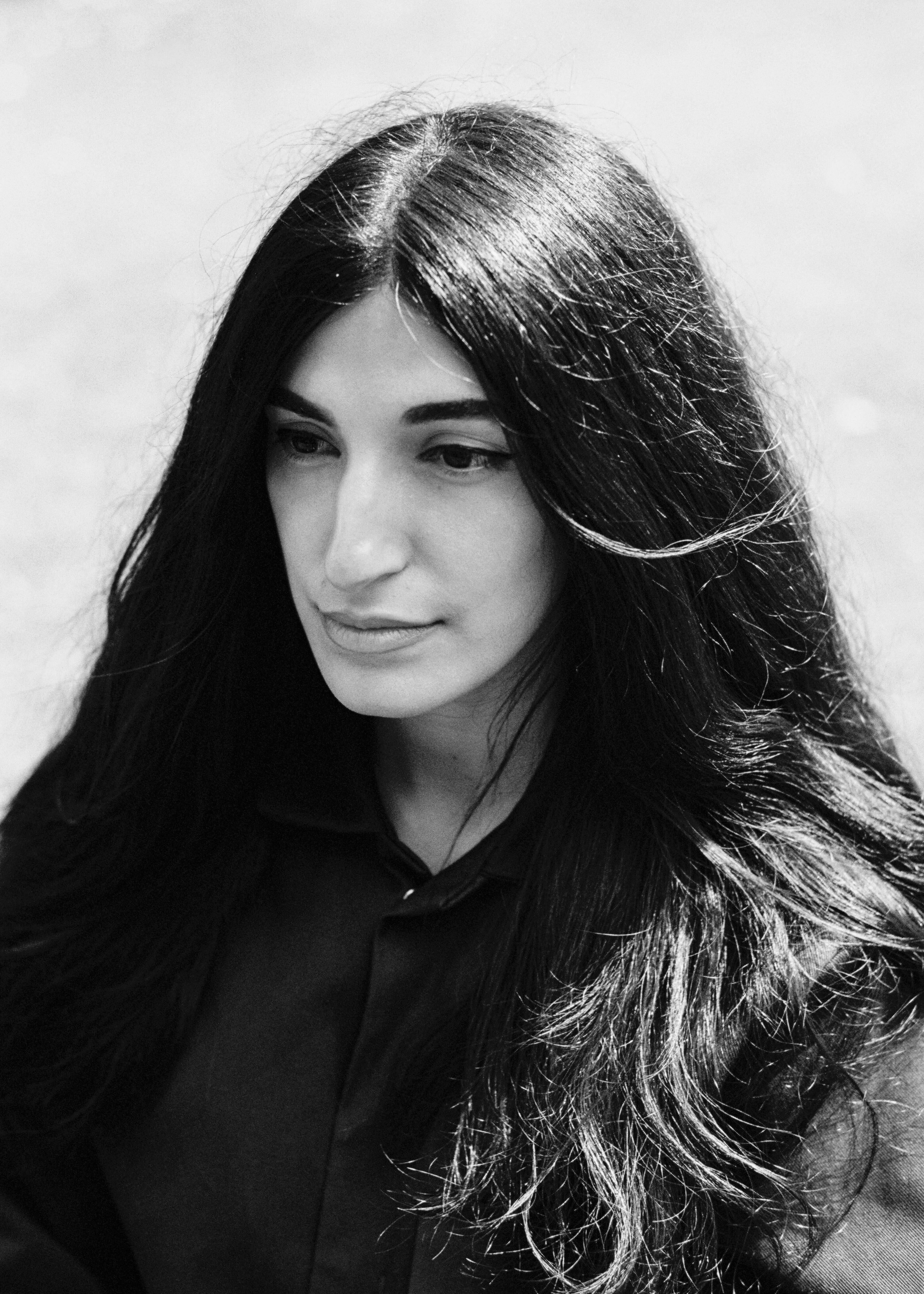
Moshtari Hilal is a visual artist and writer based in Hamburg, Germany, and co-founder of AVAH collective. Her essayistic debut, “Hässlichkeit“ (Ugliness) was translated into English in 2025 by the New York–based publishing house New Vessel Press. Together with political geographer Sinthujan Varatharajah, Hilal published Hierarchies of Solidarity in 2024 with Wirklichkeit Books, following their 2022 book English in Berlin – Exclusions in a Cosmopolitan Society. In February 2026, Shahrbanoo Sadat’s romantic comedy No Good Men premiered in Berlin; Hilal assisted on set and worked closely with the Afghan diaspora community in Germany as Co-Director of Casting.
This program is supported, in part, by public funds from the New York City Department of Cultural Affairs in partnership with the City Council.
Mercedes
An enduring fable satirizing Egypt's multi-layered society in the early 1990s. Noubi, a young communist from an aristocratic family, is sent by his mother to a psychiatric institution to keep him from squandering his inheritance on political causes. Four years later, he is released to discover that he has a brother he's never known about. To find him—and as the masses celebrate the qualification of the national football team to the World Cup—Noubi embarks on a journey across the city's underworld, during which he falls in love with a charming belly dancer who happens to look exactly like his mother.
About the Filmmaker
Egyptian filmmaker Yousry Nasrallah studied economics and political sciences at Cairo University and went on to become a film critic and assistant director in Beirut. Upon returning to Cairo in 1982, he worked with Youssef Chahine on Bonaparte in Egypt, with production company Misr International Films going on to produce his first films. His first feature film, Sarikat Sayfeya (Summer Thefts, 1988), was screened in Cannes, and some critics consider it one of the films that contributed to the renaissance of Egyptian cinema in the 1980s. Since then, notable credits include Mercedes (1993) which was selected at the Locarno Film Festival, and The City (1999) which was awarded Locarno’s Special Jury Prize, as well as Scheherazade, Tell Me a Story (2009), which won the Premio Lina Mangiacapre in Venice. In 2011, his short film Interior/Exterior was included in 18 Days, an anthology of shorts screened at the Festival de Cannes in honour of Egypt. The following year he was back in the Official Selection, in Competition with After the Battle. His last film Brooks, Meadows and Lovely Faces was presented in Official Competition at the Locarno Film Festival in 2016.
- Year1994
- Runtime108 mins.
- LanguageArabic
- CountryEgypt, France
- Subtitle LanguageEnglish
- DirectorYousry Nasrallah
COMIC RELIEF: Satire in mass culture and film in Afghanistan and its diasporas
Kitschy, low-budget B-films, TV shows; dubbed Turkish dramas and Hindi serials; late-night comedy talk shows and satire; Comedy is a wide-spread genre in Afghanistan and its diaspora. In our film programme COMIC RELIEF we look at the different genres of comedy and satire produced in Afghanistan.
The programme is anchored by The Prince of Nothingwood (2017) by Sonia Kronlund - a portrait of Salim Shaheen, Afghanistan’s most popular “youtube” filmmaker - labelled the Sultan of Cinema, Shaheen utters the phrase “Cinema or death” a declaration to his belief in filmmaking as survival. A former soldier, unwillingly drafted into war, Shaheen transforms his life experiences into films that speak directly to everyday audiences distributed amongst phones, to laptops, to tv screens. In this programme and accompanying talk, the curatorial collective AVAH spotlights how these often-dismissed forms become a window into an Afghanistan we don’t otherwise see.
In the programme we also see older comedies made by the Afghan film institute. Akhtar-e Masqara or Akhtar, the Joker (1981) by Latif Ahmadi contrasts the impoverished conditions in Kabul’s old city, home of the friendly and naïve Akhtar, with the fashionable bungalows and modern lifestyle of the affluent neighbourhood of Shar-e nau. What starts as a comedy gradually unfolds into a tragic critique, using humour to expose the class divisions of Afghan society. Talabgar or The Suitor (1980) by Khaleq Halil, is devised as a comedy, with an imposter trying to obtain upward mobility by marrying the emancipated Sima. His desire to marry “upwards” is driven by aspiration, exposing marriage as a transactional tool within a rigid class system.
Filmorgh or Elephantbird (2018) by Amir Masoud Soheili is about the last wish of an old Afghan man to give his "elephant-bird" (turkey) to his grandchild. Soheili captures the essence of travelers' conversations on Afghanistan’s dangerous roads; where a joke is slipped in between life-threatening moments and humour becomes a temporary release.
Our programme is contrasted and compared to Mercedes (1994) by Yousry Nasrallah. In this lively comedy Nasrallah satirizes Egyptian social and political tension through the character Noubi. Rejecting the trappings of his wealthy materialistic family including the ultra-luxe Egyptian status symbol, a Mercedes-Benz.
By bringing together commercial hits, archival films and more recent documentaries Comic Relief showcases what persists and expands when cinema is developed during political instability and war. The films in this series reveal comedy not merely as entertainment, but as a gesture, a coping mechanism, and a conduit through which Afghan cultural memory is sustained.
COMIC RELIEF is curated by AVAH Collective and is co-presented by ArteEast and BAM. This program is part of the legacy program Unpacking the ArteArchive, which preserves and presents over 20 years of film and video programming by ArteEast. A selection from the program will be screened in-person at 7pm on March 3rd followed by a discussion with filmmaker Arsalan Danish and Parwana Haydar (AVAH collective) moderated by Moshtari Hilal (AVAH collective). For more information about the in-person screening visit bam.org. The full program will be screened online on artearchive.org from March 5 - 15 2026.
About the Curators
Parwana Haydar is a London-based artist and filmmaker. In her work, Haydar explores themes such as memory, family, archives and displacement. Her films have been exhibited at Somerset House in London, Eric Mouchet Gallery in Paris and Eigenheim Gallery in Weimar/Berlin. She is the co-curator of AVAH (Afghan Visual Arts and History) Collective, an independent research collective and multimedia platform for artists from Afghanistan and its diaspora. Through her curation at AVAH, she has curated talks and workshops with institutions such as Void Gallery in Derry, Independent Cinema Office at the British Film Institute and HKW in Berlin.
Moshtari Hilal is a visual artist and writer based in Hamburg, Germany, and co-founder of AVAH collective. Her essayistic debut, “Hässlichkeit“ (Ugliness) was translated into English in 2025 by the New York–based publishing house New Vessel Press. Together with political geographer Sinthujan Varatharajah, Hilal published Hierarchies of Solidarity in 2024 with Wirklichkeit Books, following their 2022 book English in Berlin – Exclusions in a Cosmopolitan Society. In February 2026, Shahrbanoo Sadat’s romantic comedy No Good Men premiered in Berlin; Hilal assisted on set and worked closely with the Afghan diaspora community in Germany as Co-Director of Casting.
This program is supported, in part, by public funds from the New York City Department of Cultural Affairs in partnership with the City Council.
Mercedes
An enduring fable satirizing Egypt's multi-layered society in the early 1990s. Noubi, a young communist from an aristocratic family, is sent by his mother to a psychiatric institution to keep him from squandering his inheritance on political causes. Four years later, he is released to discover that he has a brother he's never known about. To find him—and as the masses celebrate the qualification of the national football team to the World Cup—Noubi embarks on a journey across the city's underworld, during which he falls in love with a charming belly dancer who happens to look exactly like his mother.
About the Filmmaker
Egyptian filmmaker Yousry Nasrallah studied economics and political sciences at Cairo University and went on to become a film critic and assistant director in Beirut. Upon returning to Cairo in 1982, he worked with Youssef Chahine on Bonaparte in Egypt, with production company Misr International Films going on to produce his first films. His first feature film, Sarikat Sayfeya (Summer Thefts, 1988), was screened in Cannes, and some critics consider it one of the films that contributed to the renaissance of Egyptian cinema in the 1980s. Since then, notable credits include Mercedes (1993) which was selected at the Locarno Film Festival, and The City (1999) which was awarded Locarno’s Special Jury Prize, as well as Scheherazade, Tell Me a Story (2009), which won the Premio Lina Mangiacapre in Venice. In 2011, his short film Interior/Exterior was included in 18 Days, an anthology of shorts screened at the Festival de Cannes in honour of Egypt. The following year he was back in the Official Selection, in Competition with After the Battle. His last film Brooks, Meadows and Lovely Faces was presented in Official Competition at the Locarno Film Festival in 2016.
- Year1994
- Runtime108 mins.
- LanguageArabic
- CountryEgypt, France
- Subtitle LanguageEnglish
- DirectorYousry Nasrallah