
AFTER THE HOUR OF LIBERATION adapts its title from Heiny Srour’s 1974 film, The Hour of Liberation has Arrived, which captured the Marxist-Leninist rebellion against the British in the Dhofar region of Oman as it unfolded. In contrast, the films in this program document the afterlives of revolution; each revisits a resistance movement and centers the women—some infamous, others overlooked—who were at the forefront of these anticolonial struggles. Filmed decades later, freedom fighters from Algeria, Palestine, and Vietnam reflect on their role alongside their male counterparts, as well as their current circumstances and the temporality of liberation. In more recent video works by Marwa Arsanios and Huda Takriti, the artists examine the representations and imaginations of Djamila Bouhired and Leila Khaled respectively, unpacking the simultaneous celebration and marginalization of these women as they are transformed into icons.
AFTER THE HOUR OF LIBERATION is curated by Dina A. Ramadan and is co-presented by ArteEast and DCTV. This program is part of the legacy program Unpacking the ArteArchive, which preserves and presents 20 years of film and video programming by ArteEast. Selections from AFTER THE HOUR OF LIBERATION will be screened in-person at DCTV on February 10th followed by a discussion with Samah Selim moderated by the curator. For more information about the in-person screening visit firehousecinema.dctvny.org. The full program will be screened online on artearchive.org from February 11 - 21 2026.
Finally available in the United States, this classic film from the acclaimed, late novelist and filmmaker Assia Djebar is essential viewing for an understanding of women in Algeria. Taking its title and structure from the “Nouba," a traditional song of five movements, this haunting film mingles narrative and documentary styles to document the creation of women’s personal and cultural histories. Returning to her native region 15 years after the end of the Algerian war, Lila is obsessed by memories of the war for independence that defined her childhood. In dialogue with other Algerian women, she reflects on the differences between her life and theirs. In lyrical footage she contemplates the power of grandmothers who pass down traditions of anti-colonial resistance to their heirs. Reading the history of her country as written in the stories of women’s lives, Assia Djebar’s The Nouba Women of Mount Chenoua is an engrossing portrait of speech and silence, memory and creation, and a tradition where the past and present coexist.
About the Filmmaker
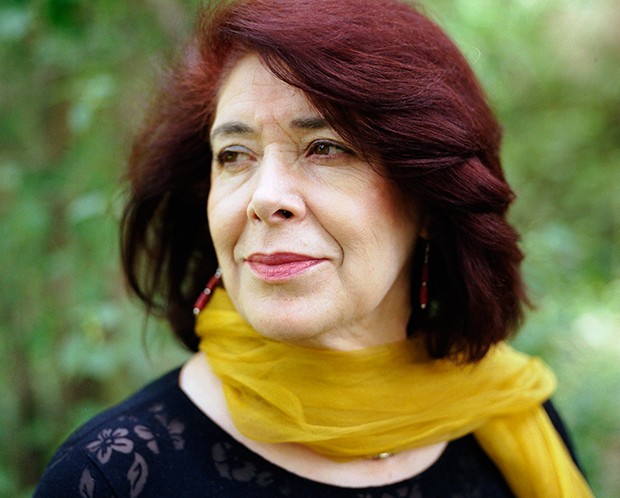 Algerian-born, Moslem raised, Paris-educated, Assia Djebar (1936- 2015) tackled all genres: poetry, plays, short-stories, novels and essays. In her books Djebar explored the struggle for social emancipation and the Muslim woman's world in its complexities. Several of her works deal with the impact of the war on women's mind. She wrote, directed, and edited her own films, winning the Biennale prize at the 1979 Venice Film Festival with her very first attempt, La Nouba des Femmes du Mont Chenoua (The nouba or "ritual" festival of the Women of Mt. Chenoua). She staged her own plays and both translated and directed the plays of others (Amiri Baraka’s, for example). In 2000, she authored an operatic libretto, "Filles d’Ismaël dans le vent et la tempête" (Daughters of Ishmael, through wind and storm). Based on her 1991 narrative on the life of the Prophet, Far from Medina, this oratorio was performed to excellent reviews in Rome and at the Palermo Arts Festival. A second version, in classical Arabic this time, is commissioned for future performance in Holland. Djebar is one of North Africa's most famous and influential writers, and was elected to the Académie française on June 16, 2005, the first writer from the Maghreb to achieve such recognition. She won the following awards: Peace Prize of Frankfurt Book Fair (2000); International Prize of Palmi (Italy); Marguerite Yourcenar Prize for Literature (Boston, MA); International Literary Neustadt Prize (1996); International Critics Prize, Biennale of Venice, for the film "La nouba des femmes du Mont Chenoua."
- Year1977
- Runtime115 mins
- LanguageAlgerian
- CountryAlgeria
- Subtitle LanguageEnglish
AFTER THE HOUR OF LIBERATION adapts its title from Heiny Srour’s 1974 film, The Hour of Liberation has Arrived, which captured the Marxist-Leninist rebellion against the British in the Dhofar region of Oman as it unfolded. In contrast, the films in this program document the afterlives of revolution; each revisits a resistance movement and centers the women—some infamous, others overlooked—who were at the forefront of these anticolonial struggles. Filmed decades later, freedom fighters from Algeria, Palestine, and Vietnam reflect on their role alongside their male counterparts, as well as their current circumstances and the temporality of liberation. In more recent video works by Marwa Arsanios and Huda Takriti, the artists examine the representations and imaginations of Djamila Bouhired and Leila Khaled respectively, unpacking the simultaneous celebration and marginalization of these women as they are transformed into icons.
AFTER THE HOUR OF LIBERATION is curated by Dina A. Ramadan and is co-presented by ArteEast and DCTV. This program is part of the legacy program Unpacking the ArteArchive, which preserves and presents 20 years of film and video programming by ArteEast. Selections from AFTER THE HOUR OF LIBERATION will be screened in-person at DCTV on February 10th followed by a discussion with Samah Selim moderated by the curator. For more information about the in-person screening visit firehousecinema.dctvny.org. The full program will be screened online on artearchive.org from February 11 - 21 2026.
Finally available in the United States, this classic film from the acclaimed, late novelist and filmmaker Assia Djebar is essential viewing for an understanding of women in Algeria. Taking its title and structure from the “Nouba," a traditional song of five movements, this haunting film mingles narrative and documentary styles to document the creation of women’s personal and cultural histories. Returning to her native region 15 years after the end of the Algerian war, Lila is obsessed by memories of the war for independence that defined her childhood. In dialogue with other Algerian women, she reflects on the differences between her life and theirs. In lyrical footage she contemplates the power of grandmothers who pass down traditions of anti-colonial resistance to their heirs. Reading the history of her country as written in the stories of women’s lives, Assia Djebar’s The Nouba Women of Mount Chenoua is an engrossing portrait of speech and silence, memory and creation, and a tradition where the past and present coexist.
About the Filmmaker
Algerian-born, Moslem raised, Paris-educated, Assia Djebar (1936- 2015) tackled all genres: poetry, plays, short-stories, novels and essays. In her books Djebar explored the struggle for social emancipation and the Muslim woman's world in its complexities. Several of her works deal with the impact of the war on women's mind. She wrote, directed, and edited her own films, winning the Biennale prize at the 1979 Venice Film Festival with her very first attempt, La Nouba des Femmes du Mont Chenoua (The nouba or "ritual" festival of the Women of Mt. Chenoua). She staged her own plays and both translated and directed the plays of others (Amiri Baraka’s, for example). In 2000, she authored an operatic libretto, "Filles d’Ismaël dans le vent et la tempête" (Daughters of Ishmael, through wind and storm). Based on her 1991 narrative on the life of the Prophet, Far from Medina, this oratorio was performed to excellent reviews in Rome and at the Palermo Arts Festival. A second version, in classical Arabic this time, is commissioned for future performance in Holland. Djebar is one of North Africa's most famous and influential writers, and was elected to the Académie française on June 16, 2005, the first writer from the Maghreb to achieve such recognition. She won the following awards: Peace Prize of Frankfurt Book Fair (2000); International Prize of Palmi (Italy); Marguerite Yourcenar Prize for Literature (Boston, MA); International Literary Neustadt Prize (1996); International Critics Prize, Biennale of Venice, for the film "La nouba des femmes du Mont Chenoua."
- Year1977
- Runtime115 mins
- LanguageAlgerian
- CountryAlgeria
- Subtitle LanguageEnglish